

How to rank higher on Talabat: what moves you up the list
Nobody outside Talabat knows the exact formula. Here is what we see move restaurants up the list, in the order we fix it.

On this page
Every restaurant owner asks the same question: why is that place above us? Talabat does not publish its ranking formula, and anyone who claims to know it exactly is guessing. What we can share is what we see move position across the brands we manage, and the order we fix it in.
Ranking follows customer behaviour. Restaurants that get tapped, ordered from, delivered fast and rated well get shown more. So fix ratings and conversion first, then delivery reliability, and only then pay for visibility with CPC. Paying to be seen with a weak listing just buys you more people saying no.
How ranking actually works, in plain terms
Think of the app as a shop manager deciding which products go at eye level. It wants the restaurants most likely to turn a search into a happy, repeat customer. So it watches signals like these:
- Rating and review volume. In our experience, a 4.6 with hundreds of ratings outperforms a 4.8 with a dozen.
- Conversion. How often people who see you tap your menu, and how often people on your menu order.
- Reliability. Preparation time, delivery time, rejected and cancelled orders, items marked unavailable.
- Relevance. Whether your restaurant and item names match what people type.
- Paid placement. CPC campaigns and featured slots, which put you higher for a price.
- 1. Rating4.3 to qualify for paid visibility, 4.5 to win taps on its own
- 2. ConversionMore people tap your listing, and around 20% or more of menu visitors order
- 3. ReliabilityHonest prep times, no rejected orders, accurate stock
- 4. RelevanceItem and brand names that match what people type
- 5. Paid placementCPC and featured slots, only once 1 to 4 are in place
Steps 1 to 4 are earned and compound. Step 5 is rented and stops the day you stop paying.
The first four are earned. The fifth is rented. The order matters.
1. Get the rating above 4.3, then 4.5
Below 4.3, we do not run CPC at all. Every paid impression shows a number that makes customers hesitate. Between 4.3 and 4.5, the listing works but competes on price. Above 4.5, it starts winning taps on its own.
Ratings move through operations more than marketing: portion consistency, packaging that keeps fries crisp, the right temperature on arrival, and nothing missing from the bag. Read the last 50 reviews, group the complaints, and fix the top two before anything else.
2. Fix conversion before buying traffic
We track two numbers on every listing: impressions to menu visits, and menu visits to orders. There is no published benchmark per app, so compare each number with your own last eight weeks. For the second step, food delivery marketers often treat a menu-to-order conversion of around 20% as healthy (Gorevly), and our Korean café client moved from 16% to 28%. If people see you but do not tap, the problem is your cover image, name, rating or price signal. If they tap but do not order, it is the menu itself: too long, unclear names, weak photos or prices that feel wrong for the portion.
Item names are the fastest win. Customers search for dishes, and the app matches the words in the item name. We wrote a full guide on naming menu items for delivery search.
What better conversion did for a premium café
A Korean café in Al Quoz had a great product, an AED 120 ticket and very few delivery orders. We did not touch the price. We matched brand and dish names to what its social followers were searching, rebuilt the menu around hero photos and signature tags instead of discount badges, and pointed creator content at the apps.
Discount held at 4 to 5% throughout. Client name withheld. Figures rounded.Gromad case study 04.
3. Be boringly reliable
- Keep preparation time honest. Promising 15 minutes and taking 25 costs you twice: late deliveries and worse ratings.
- Never reject orders at peak. If the kitchen is slammed, extend prep time instead.
- Keep availability accurate. Items marked available but not in stock lead to cancellations.
- Stay open through the hours you publish. Closing early on quiet nights teaches the app you are unreliable.
4. Then, and only then, pay for visibility
CPC campaigns work when the listing converts and the order is profitable. Our checklist before increasing any CPC budget:
| Check | Threshold |
|---|---|
| Rating | 4.3 or higher (4.5+ is best) |
| Food cost | Under 30% |
| CM3 (what you keep after the app and food) | 25% or more, roughly AED 20 to 22 per order at a AED 50 to 60 average order |
| Menu to order conversion | Around 20% or better, and rising week on week |
When we do switch CPC on, we bid by store and by time of day, and pause automatically if CM3 drops below the floor. For a four-store dessert brand that meant spending hardest on the 9pm craving window and almost nothing at lunch.
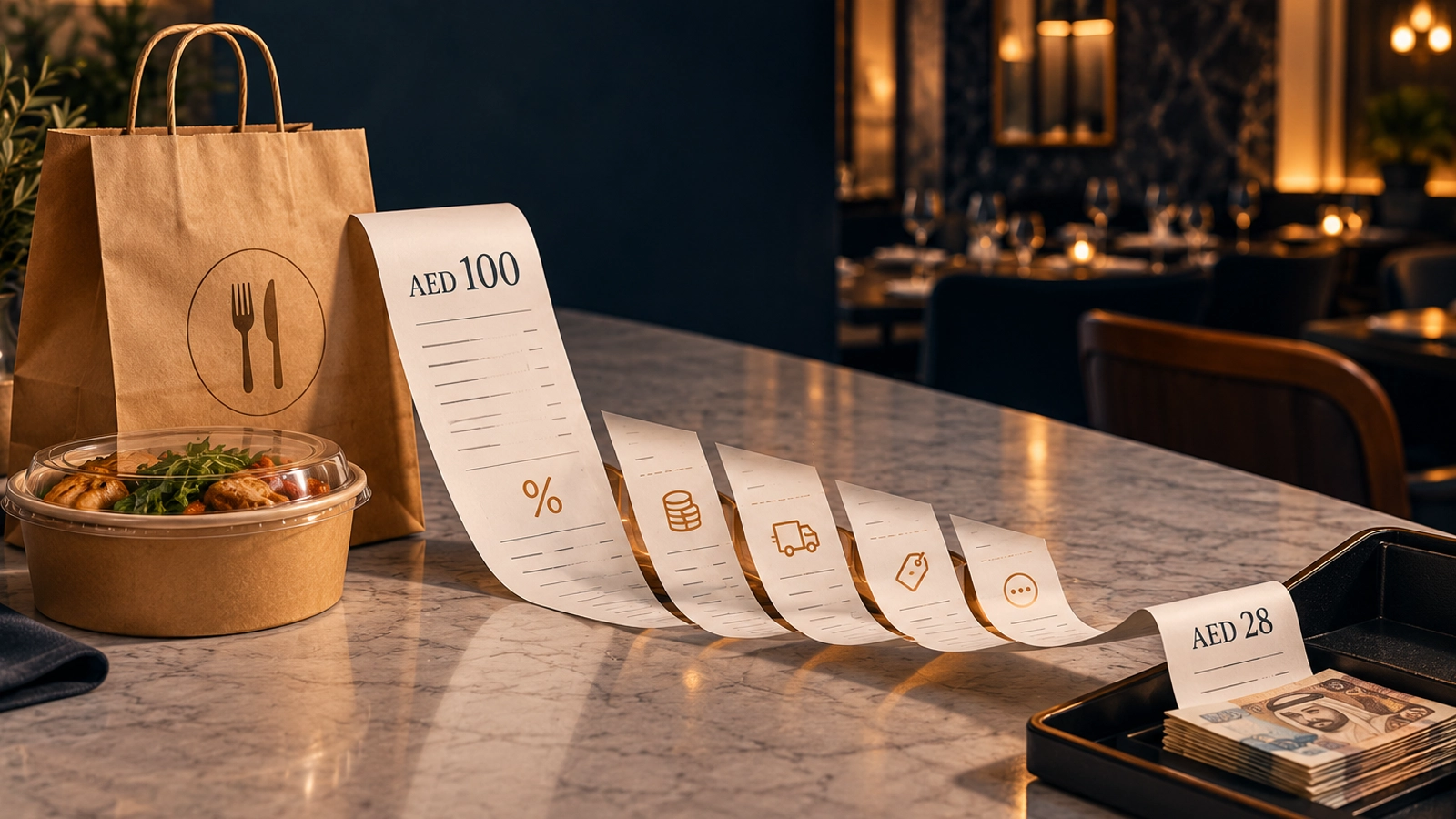
If CM3 is under 20%, more visibility just loses money faster. Read what your restaurant really keeps from AED 100 to work yours out.
What to watch every week
Ranking is not a one-off project. Our own rule: we review every listing weekly and escalate when sales drop 10% week on week, or when orders per store per day fall by more than 5 to 6%. Catching a slide in week one is cheap. Catching it in month three means rebuilding.
Intekhab takes brands from onboarding to growth: menu structure, pricing, combos and everything that decides how a restaurant performs on the apps.
More from Mohammad
 Martha Thomas
 Annie Travasso